

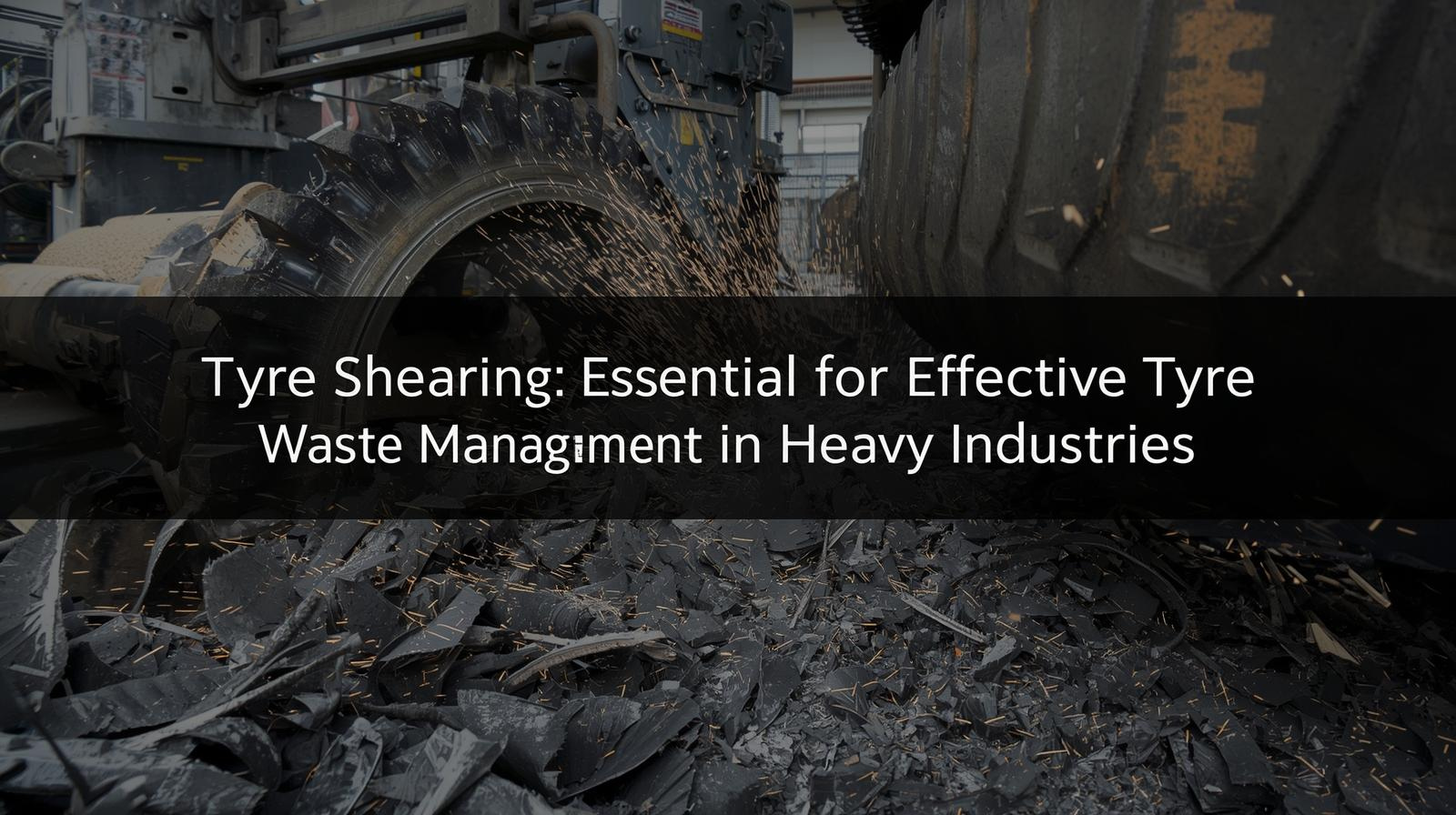
Heavy industries across Australia produce significant volumes of end-of-life tyres that require safe, compliant, and efficient processing. Mining, construction, agriculture, and logistics operations rely on structured waste management systems to reduce environmental risk and meet regulatory obligations. Effective tyre recycling has become a key operational requirement for industries handling large tyre volumes.
Tyre shearing is a mechanical pre-processing method used to cut large and reinforced tyres into smaller sections before further treatment. This process aligns with established material handling and recovery practices in compliant processing facilities, as outlined in Tyre Crumb’s operational background and capabilities. Tyre shearing plays a central role in industrial tyre waste management by enhancing handling safety, processing efficiency, and material recovery. This article outlines how tyre shearing supports heavy industries, its role in compliant rubber recycling, and why it is essential for sustainable waste management outcomes.
Tyre shearing is a mechanical process designed to cut whole tyres into smaller, controlled sections. It is primarily used for large, reinforced, or off-the-road tyres that cannot be processed efficiently in their original form.
Within structured tyre recycling systems, tyre shearing is usually the first stage of processing. By reducing tyre size, this method improves handling safety and prepares material for downstream mechanical treatment.
Industrial tyres are engineered for durability, high load capacity, and long service life. These features make end-of-life management challenging when tyres are stored or transported without pre-processing.
Tyre shearing supports heavy industries by:
These benefits make tyre shearing a crucial part of industrial rubber recycling operations. Organisations seeking tailored tyre collection services and compliance support can explore Tyre Crumb’s tyre removal and scheduling options.
Efficient material recovery depends on consistent feedstock preparation. Whole tyres contain dense rubber compounds reinforced with steel and textile fibres, which complicates processing when left intact.
Tyre shearing produces uniform tyre sections that allow more reliable mechanical separation. This reduces equipment stress and improves overall processing efficiency.
As a result, rubber recycling systems achieve higher recovery rates and consistent output quality. For examples of how recycled materials can be repurposed across industries, see the range of recycled materials available from Tyre Crumb.
Tyre shearing forms the foundation of integrated processing workflows. Once tyres are reduced in size, they can move through shredding, granulation, and separation stages more efficiently.
This approach enables facilities to process a wider range of tyre sizes, including truck and industrial tyres. Improved throughput and operational stability are key outcomes. Modern tyre recycling facilities rely on tyre shearing to maintain scalable and reliable operations. The synergy between pre-processing and final material applications supports performance across manufacturing, infrastructure, and community use cases.
Australia maintains strict regulatory controls on tyre waste management due to environmental and safety risks. Stockpiled tyres present fire hazards and long-term contamination concerns.
Tyre shearing reduces these risks by enabling controlled storage and traceable processing. It also supports national objectives focused on reducing landfill reliance.
For industrial operators, compliant rubber tyre recycling is essential to meeting environmental obligations.
From an operational perspective, tyre shearing simplifies logistics across the recycling chain. Smaller tyre sections are easier to store, transport, and feed into processing systems.
This enhances workplace safety and reduces downtime. Facilities benefit from smoother workflows and predictable processing outcomes. By strengthening system efficiency, tyre shearing improves overall rubber recycling performance.
Recovered rubber contributes to a wide range of applications across infrastructure, sport, and industrial environments. When processed correctly, recycled rubber can be repurposed into products that provide safety, flexibility, and resilience.
Tyre shearing improves material quality by enabling controlled processing conditions. This supports higher-value reuse outcomes. Through structured rubber tyre recycling, tyre waste becomes a reliable secondary resource supporting sustainable practices across sectors and a variety of industrial applications of recycled rubber.
Tyre shearing is most effective when part of an integrated system that includes tyre collection, pre-processing, separation, and final handling.
Facilities such as those operated by Tyre Crumb use tyre shearing to support advanced processing and compliance reporting. Integrated systems improve transparency and consistency for industrial operations. This approach strengthens long-term outcomes for tyre recycling in Australia.
As industrial activity grows, tyre waste volumes are expected to increase. Reliable and scalable processing methods are essential for managing this growth responsibly.
Tyre shearing provides the technical foundation for handling large tyres safely. It supports material recovery, operational efficiency, and regulatory compliance. For heavy industries, tyre shearing remains a key driver of effective rubber recycling and responsible waste management.
What is tyre shearing in industrial waste management?
Tyre shearing is a mechanical process that cuts whole tyres into smaller sections. It prepares large tyres for safe handling and processing within structured tyre recycling systems.
Why is tyre shearing important for heavy industries?
Heavy industries generate large and reinforced tyres that are difficult to manage at the end of life. Tyre shearing improves safety, efficiency, and compliance in rubber recycling operations.
How does tyre shearing support sustainable waste management?
By reducing tyre size and enabling controlled processing, tyre shearing improves material recovery. This supports environmentally responsible rubber tyre recycling practices.
Can large industrial tyres be recycled effectively?
Large tyres can be processed efficiently when prepared correctly. Tyre shearing allows consistent processing within modern tyre recycling facilities.
For organisations managing industrial tyre volumes, access to accurate technical guidance and compliant processing information is essential. Detailed support, regulatory documentation, and operational guidance related to tyre waste management can be requested through Tyre Crumb’s Contact page.






Comments are closed