

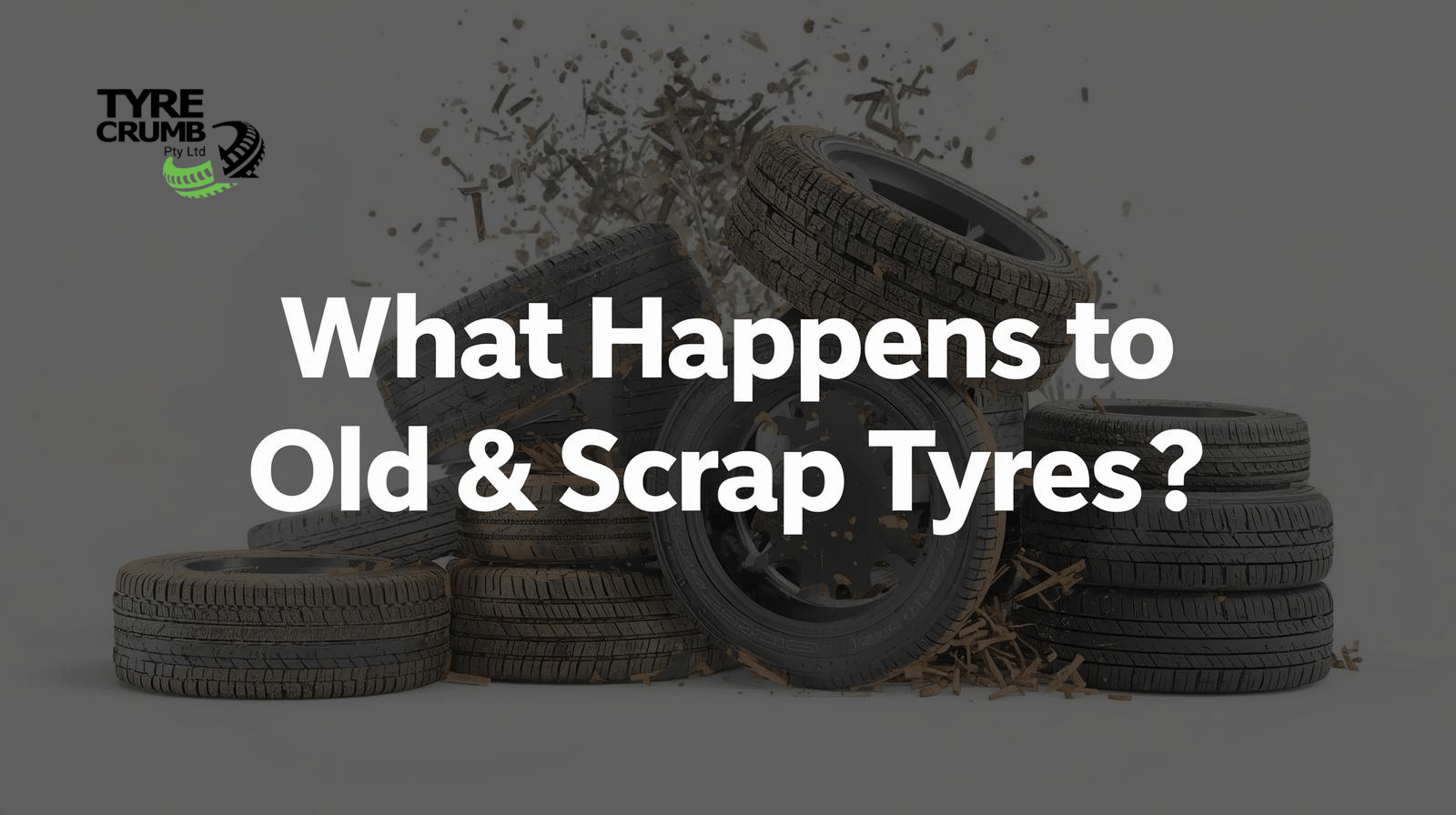
Searches for local tyre recycling often aim to understand how old and scrap tyres are managed responsibly. In Australia, tyre recycling operates through regulated systems that divert tyres from landfill, reduce environmental risks, and recover valuable materials from end-of-life tyres.
This article explains how tyre recycling Australia works at local and national levels, what happens after tyres are collected, and how discarded tyres are transformed into reusable resources. It also outlines how TyreCrumb supports accredited and compliant recycling operations across the country.
Tyre recycling Australia refers to the regulated process of collecting, processing, and recovering materials from tyres that have reached the end of their usable life. Rather than being stockpiled or sent to landfill, tyres are recycled to extract materials such as rubber and steel for reuse across multiple industries.
Tyres are designed for durability and do not break down naturally, which makes improper disposal a long-term environmental risk. Recycling systems reduce hazards such as uncontrolled stockpiles, fire risk, and soil contamination. At scale, tyre recycling enables discarded rubber to be converted into high-value resources that support sustainable material recovery across Australia.
Waste tyre disposal begins when tyres are removed from vehicles and are no longer suitable for use. These tyres must be processed through licensed recycling facilities to meet environmental and regulatory standards.
A compliant disposal process typically involves:
Recycled tyre materials are increasingly used in infrastructure projects, including road construction, where rubber content contributes to durability and improved environmental performance.
When tyre recycling near me is searched, the intent is to identify locally available services that manage old and scrap tyres generated within a specific area. These services focus on collecting tyres from nearby workshops, depots, and facilities and ensuring they are processed through licensed recycling operations.
Local tyre recycling services provide access to compliant recycling pathways where tyres are tracked, handled responsibly, and processed in line with Australian environmental regulations. The emphasis is not only on proximity, but on ensuring locally collected tyres enter approved recycling systems rather than being disposed of incorrectly.
After collection, tyres are transported to licensed recycling facilities where processing follows national tyre recycling standards. This ensures consistent recycling outcomes regardless of where tyres are generated.
The recycling process generally includes:
These steps create a variety of material outputs suitable for multiple industries and applications.
During rubber tyre recycling, shredded tyres are processed to separate rubber from other components. Rubber is further refined into crumb rubber and chips suitable for reuse.
Recycled rubber materials are applied across diverse sectors, with performance characteristics tailored to different environmental and operational demands. Common uses include civil construction, landscaping, playground surfaces, and industrial infrastructure.
Steel reinforcement in tyres is separated during processing and recycled for reuse in manufacturing and construction, reducing reliance on virgin raw materials. Synthetic fibres are also processed through approved recovery methods, minimising residual waste.
Together, these processes enhance resource efficiency and support circular economy principles.
Accredited tyre recycling ensures compliance with environmental and industry standards. Certification confirms that tyres are processed responsibly, tracked appropriately, and recycled using approved methods.
For organisations relying on local recycling services, accredited recycling reduces compliance risk and supports responsible waste tyre disposal, while reinforcing sustainability objectives. TyreCrumb operates within recognised accreditation frameworks, providing assurance that recycling practices meet the highest standards.
Tyre recycling provides numerous environmental advantages:
Structured recycling systems convert scrap tyres into reusable materials, delivering long-term environmental and economic value.
What happens to old tyres after recycling?
Tyres are shredded and separated into rubber, steel, and fibre. Each material stream is processed and reused in construction, manufacturing, and infrastructure applications.
Is tyre recycling better than landfill disposal?
Yes. Recycling tyres reduces environmental risks, prevents landfill accumulation, and recovers materials for reuse in multiple industries.
How does tyre recycling work?
Tyres are collected locally, transported to licensed facilities, and processed through mechanical shredding, separation, and material recovery, in line with Australian compliance standards.
What is rubber tyre recycling used for?
Recycled rubber is applied in civil construction, playground surfaces, landscaping, sports infrastructure, and industrial applications.
Tyre recycling is a vital component of responsible waste management in Australia. Through regulated waste tyre disposal, advanced processing, and full material recovery, old and scrap tyres are kept out of landfill and converted into productive resources.
Well-structured recycling systems protect the environment, ensure regulatory compliance, and support sustainable material use across multiple industries. TyreCrumb plays an active role in these initiatives, providing accredited and compliant recycling solutions nationwide.
For more information on tyre recycling in Australia and accredited recycling processes, enquiries can be made through the Contact Us page to learn more about compliant recycling pathways and material recovery practices.