

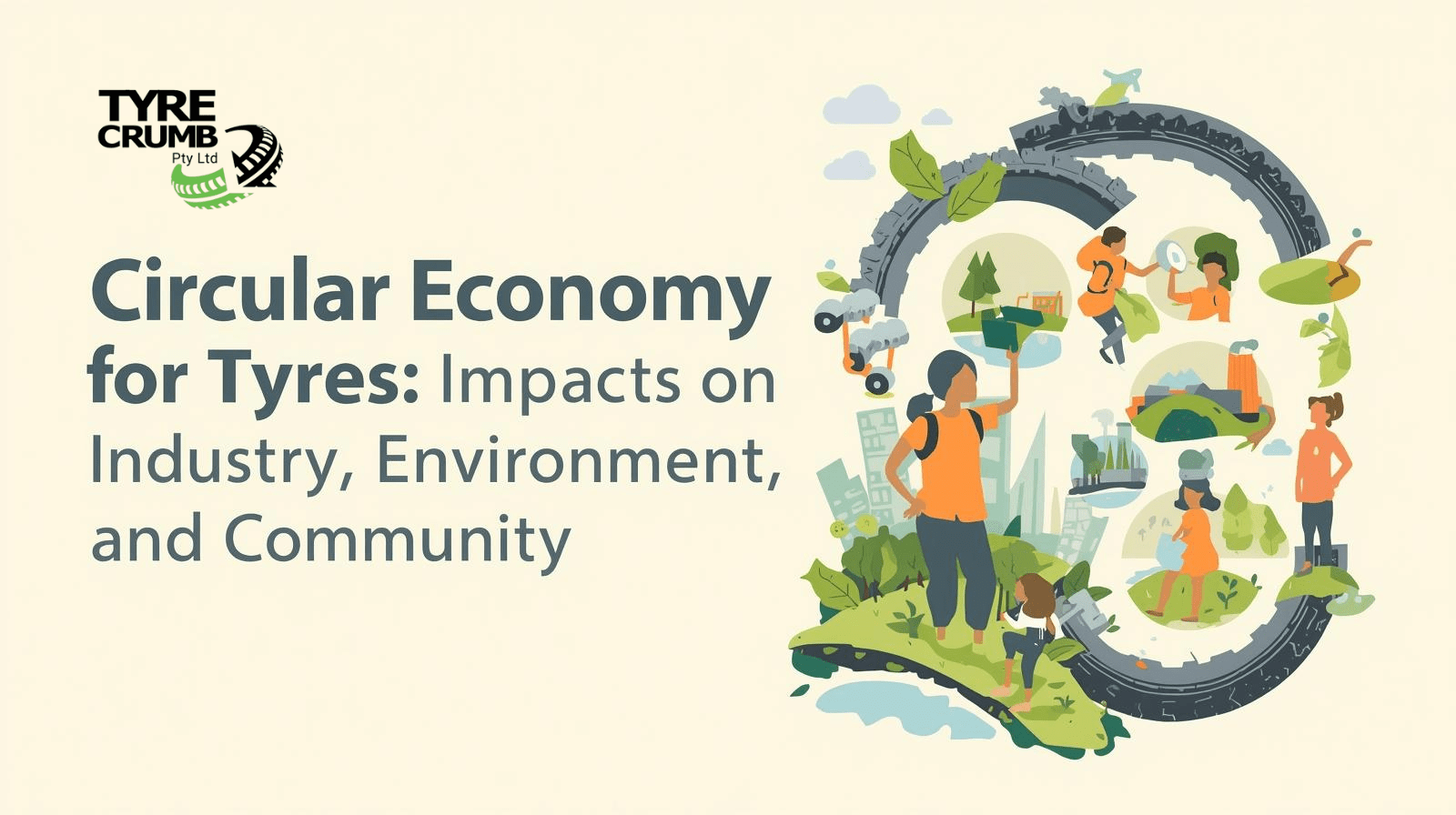
A circular economy for tyres is a structured system designed to recover, process, and reuse end-of-life tyres to reduce waste and maximise material value. This approach diverts tyres from landfill, lowers environmental risk, and enables recovered rubber and steel to be reused across industrial and infrastructure applications. Within tyre recycling Australia, circular recovery models play a critical role in supporting regulated waste management, material efficiency, and long-term sustainability outcomes.
A circular economy for tyres focuses on extending the lifecycle of tyre materials by reintegrating them into productive use after their initial service life. Instead of disposal, tyres are treated as recoverable resources that can support secondary manufacturing, construction, and infrastructure applications.
Traditional linear models follow a manufacture–use–discard pattern, which contributes to landfill accumulation, fire hazards, and environmental degradation. Circular tyre recycling replaces this approach by prioritising controlled recovery, mechanical processing, and material reuse, with effective processing playing a key role in preparing tyres for safe handling and downstream recycling across industrial environments that rely on recycled materials to support modern infrastructure.
Tyre recycling in Australia operates within a regulated and process-driven framework designed to ensure environmental protection and maximum material recovery.
Tyre Collection and Management
A tyre recycling company collects end-of-life tyres from commercial operators, councils, transport fleets, and industrial facilities. Collection systems are structured to manage varying tyre sizes and volumes while maintaining safety, traceability, and regulatory compliance. Effective collection plays a foundational role in preventing illegal dumping and uncontrolled stockpiling.
Mechanical Processing and Tyre Shearing
Once collected, tyres undergo mechanical processing to reduce their size and enable material separation. Tyre shearing is a critical stage in this process, particularly for large and heavy-duty tyres. Controlled shearing improves handling efficiency and prepares tyres for downstream recycling stages, supporting safer and more effective waste management across industrial operations.
Material Separation and Recovery
Processed tyres are separated into rubber and steel components. Rubber is further refined into shred, chips, granules, or powder depending on end-use requirements. These recovered materials are supplied for civil construction, road infrastructure, playground surfacing, sports facilities, landscaping, and industrial manufacturing. Steel is returned to metal recycling streams for reuse in manufacturing.
As a regulated tyre recycling company in Victoria, TyreCrumb applies this structured approach to support circular tyre management across multiple sectors.
Circular tyre recycling delivers measurable benefits for industries that require compliant waste solutions and reliable material supply.
Improved Resource Efficiency
Recovered tyre materials reduce reliance on virgin rubber and steel, supporting sustainable production practices and long-term material availability for infrastructure and manufacturing projects.
Enhanced Infrastructure Performance
Recycled rubber products provide durability, flexibility, and impact absorption, making them suitable for transport infrastructure, safety surfaces, and recreational environments, with these materials supporting a wide range of practical applications across construction and industrial settings.
Regulatory Compliance and Risk Reduction
Engaging a compliant tyre recycling company supports adherence to environmental regulations and reduces risks associated with tyre storage, disposal, and unmanaged waste. Structured recycling processes are particularly important for heavy industries handling high tyre volumes.
Through these outcomes, tyre recycling Australia contributes to resilient and responsible industrial supply chains.
The environmental benefits of circular tyre recycling are significant and long-term.
By keeping tyre materials in circulation, tyre recycling Australia supports national waste reduction targets and broader environmental protection objectives.
Circular tyre recycling also delivers direct benefits at a community level.
Cleaner and Safer Surroundings
Responsible tyre recovery reduces illegal dumping and associated fire, health, and safety risks in urban, regional, and rural environments.
Employment and Economic Contribution
Tyre recycling operations support employment across logistics, processing, and material handling, contributing to regional economic activity and skills development.
Sustainable Public Infrastructure
Recycled tyre materials are widely used in public spaces such as playgrounds, sports facilities, and safety surfaces, improving durability and performance while supporting sustainable infrastructure development. TyreCrumb’s range of recycled products, including rubber granules, mulch, and safety surfacing, provides the materials needed to deliver long-lasting, environmentally responsible infrastructure solutions.
A tyre recycling company in Victoria operates within strict environmental and operational regulations to ensure safe and responsible tyre processing. These regulatory frameworks support consistent recycling outcomes while protecting environmental and community interests.
TyreCrumb operates as a specialist tyre recycling company focused on material recovery rather than disposal. By managing tyres from collection through to recycled output, TyreCrumb enables industries to participate in a circular economy model that prioritises reuse, compliance, and sustainability.
A circular economy for tyres integrates tyre recycling, material recovery, and industrial reuse to reduce waste while delivering long-term value for industry, the environment, and the community. By recovering and reintegrating materials into productive supply chains, circular tyre recycling supports sustainable infrastructure development and responsible resource management.
As tyre volumes continue to increase, tyre recycling Australia remains essential for addressing the environmental challenges associated with end-of-life tyres. Through structured processes and material recovery, TyreCrumb contributes to a more sustainable and efficient tyre recycling ecosystem.
What is tyre recycling in Australia?
Tyre recycling Australia involves collecting and processing end-of-life tyres to recover rubber and steel for reuse in construction, infrastructure, and industrial applications.
Why is a circular economy important for tyres?
A circular economy reduces landfill waste, limits environmental risks, and ensures tyre materials are reused rather than discarded.
What does a tyre recycling company do?
A tyre recycling company manages tyre collection, mechanical processing, material separation, and the supply of recovered materials for secondary use.
Why choose a tyre recycling company in Victoria?
A tyre recycling company in Victoria operates under strict regulatory standards, ensuring compliant and environmentally responsible tyre recycling outcomes.
Organisations participating in tyre recycling Australia require efficient and compliant pathways for managing end-of-life tyres within a circular economy framework. TyreCrumb’s structured tyre collection, material recovery, and recycling solutions support industry needs, environmental goals, and regulatory compliance. Explore how these processes can enhance sustainability and operational efficiency on the Contact page.