

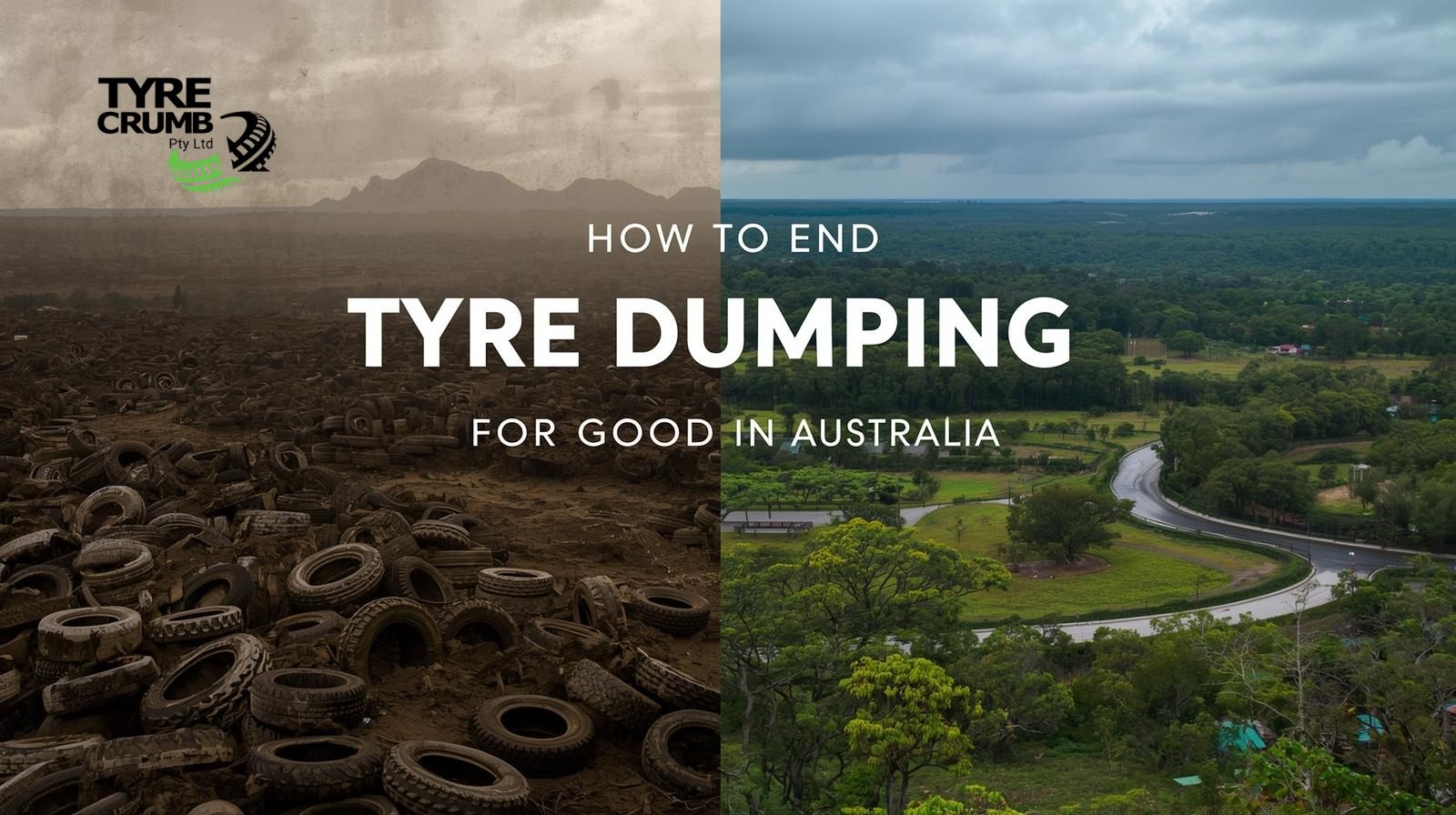
“Over 50 million tyres reach end-of-life in Australia every year, yet a significant number are illegally dumped, creating serious environmental, health, and safety risks. Illegal tyre dumping not only threatens soil and waterways but also poses fire hazards and logistical challenges for waste management authorities.
The good news is that tyre recycling Australia solutions are now providing effective ways to manage these end-of-life tyres responsibly. This blog explores how advanced recycling systems, industry best practices, and regulatory frameworks can work together to finally end tyre dumping for good.”
Waste tyres are considered high-risk waste. When dumped illegally, they create fire hazards, attract vermin, and can contaminate soil and waterways as they break down. Stockpiled tyres also release toxic smoke if ignited, making fire authorities and environmental agencies treat them as a major public safety issue.
Australia generated an estimated 537,000 tonnes of used tyres in 2023–24, yet only about 26% of those tyres resulted in genuine circular economy outcomes such as reuse or recycling. More than 100,000 tonnes of mining tyres are buried onsite each year, and a significant portion of tyre waste still ends up in landfill or stockpiles rather than being productively reused.
Several factors contribute to ongoing dumping in Australia:
These challenges highlight the need for a nationwide, coordinated approach to end-of-life tyre management.
A key part of ending tyre dumping is ensuring end-of-life tyres are processed safely. Modern tyre recycling in Australia has advanced significantly over the past decade. Facilities are now equipped with automated shredding lines, mechanical separation systems, and high-capacity rubber tyre recycling technology.
The tyre recycling process typically involves:
This technical process converts a high-risk waste stream into a valuable resource used in construction, manufacturing, and road surfacing.
Accreditation is one of the strongest tools Australia has to combat illegal dumping. Tyre Stewardship Australia (TSA) oversees the national stewardship scheme, certifying recyclers and collectors who meet strict environmental and operational standards.
Accredited recycling ensures:
When suppliers, fleets, and retailers choose accredited operators, waste tyres remain within a regulated, accountable system—making illegal dumping virtually impossible.
Rubber tyre recycling is central to Australia’s circular economy goals. Instead of allowing tyres to sit in landfills, recycling transforms them into new materials that feed back into local industries.
Crumb rubber—one of the most valuable recovered materials—has widespread applications, including:
From an environmental perspective, recycling waste tyres has measurable impact. For example, converting vehicle tyres into crumb rubber can reduce CO₂ emissions by up to 70% compared to landfill or incineration, while also conserving valuable resources like steel and textile fibres.
These applications turn waste into economic opportunity, reduce reliance on virgin rubber, and support sustainable infrastructure nationwide.
As one of Australia’s established tyre recycling manufacturers, TyreCrumb plays a core role in reducing tyre dumping and improving national resource recovery.
TyreCrumb’s advanced systems allow for:
By converting end-of-life tyres into reliable, Australian-made crumb rubber, TyreCrumb strengthens domestic markets for recycled materials—one of the key factors needed to stop waste tyre dumping permanently.
Eliminating tyre dumping requires national collaboration. The most effective pathway includes:
A circular, well-regulated tyre industry doesn’t just reduce waste—it adds value to the Australian economy.
1. Why is tyre recycling important in Australia?
Tyre recycling helps eliminate illegal dumping, reduces fire and pollution risks, and supports Australia’s circular economy by converting waste tyres into valuable materials. As part of the broader tyre recycling Australia framework, responsible processing ensures tyres stay out of landfill and re-enter local industries as useful, sustainable products.
2. What products can be made from recycled tyres?
Recycled tyres can be processed into crumb rubber, which is used in roads, playground surfaces, sports fields, industrial flooring, matting, and various construction and manufacturing applications.
3. How does tyre recycling help stop illegal dumping?
When tyres are collected and processed through accredited recyclers, the waste stream becomes traceable, regulated, and economically valuable—greatly reducing the incentive for illegal disposal.
4. What role does TyreCrumb play?
TyreCrumb transforms end-of-life tyres into high-quality crumb rubber using advanced processing systems. Their work diverts tyres from landfill, supports responsible material recovery, and supplies sustainable rubber materials to Australian industries.
Ending tyre dumping in Australia is achievable through a combination of advanced technology, sustainable market demand, strong compliance systems, and widespread access to accredited recyclers. With improved infrastructure and growing adoption of rubber tyre recycling, the nation can convert waste tyres into valuable materials while eliminating environmental harm.
Looking forward, emerging policies, increased investment in circular economy initiatives, and innovations in material recovery will further strengthen Australia’s ability to transform waste tyres into economic and environmental assets. As both industry and government continue to collaborate, the future promises a truly closed-loop tyre lifecycle—where discarded tyres become durable road surfaces, safer playgrounds, and components of next-generation sustainable products.
For more information or to arrange your tyre collection, contact us today and take the first step toward responsible tyre recycling.






Comments are closed